
Interwar France (by Misha, Adrian, Brooks, & Purvi)
From Wikipedia, the free encyclopedia
This article is about the documentation of French history. For other uses, see France.
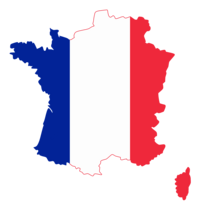
Interwar France was a country shaped by the aftermath of World War I and the growing instability of the 1920s and 1930s. Although France emerged as one of the victorious Allied powers, it was left heavily damaged, especially in its northern regions where much of the fighting had taken place. The government focused on rebuilding infrastructure, restoring industry, and securing financial stability, often relying on German reparations and foreign loans. However, recovery was uneven, and political divisions made it difficult for France to maintain consistent leadership.
Politically, France’s Third Republic was unstable throughout the interwar period. Governments changed frequently due to coalition breakdowns and ideological conflict between conservatives, socialists, and communists. Fear of both communism and fascism increased political polarization, especially after the Russian Revolution and the rise of authoritarian regimes in Italy and Germany. These tensions contributed to social unrest and the growth of extremist movements on both the left and right. The Popular Front government of the mid-1930s briefly attempted to stabilize the situation through major labor and social reforms, but it could not fully resolve France’s deeper political divisions.
Economically and socially, France experienced a slow recovery in the 1920s followed by serious disruption during the Great Depression. The economic crisis led to unemployment, falling production, and increased social tension. In response, labor movements became more active, demanding better wages, working conditions, and protections, which led to important reforms such as the 40-hour workweek and paid vacations. At the same time, French society was changing through urbanization, shifts in class structure, and the growing influence of mass media such as newspapers, radio, and film, which helped shape public opinion and political debate.
In foreign policy, France was primarily focused on security and preventing another German invasion. Early efforts included enforcing the Treaty of Versailles and building alliances in Eastern Europe, followed by diplomatic agreements like the Locarno Treaties and the Kellogg-Briand Pact, which aimed to promote peace and stability. However, as Germany rearmed under Nazi leadership in the 1930s, France became increasingly defensive. This led to military strategies such as the Maginot Line, which reflected both France’s fear of another war and its reliance on static defense.
Overall, interwar France was a nation caught between recovery and crisis. It was rebuilding from the devastation of World War I while also facing economic hardship, political instability, and rising international threats. Despite periods of reform and modernization, France struggled to maintain unity and confidence, leaving it vulnerable as Europe moved toward another major conflict in World War II.
Political Landscape - By Adrian Serafini
Treaty of Versailles (1919)
After World War I, France played a major role in shaping the postwar settlement through the Treaty of Versailles (1919). Treaty of Versailles (1919) was designed to formally end the war and punish Germany for its role in the conflict. France had suffered enormous devastation, especially in its northern regions where much of the fighting took place, so French leaders were determined to ensure Germany could not threaten them again. One of France’s main goals was to weaken Germany militarily, secure heavy reparations, and reclaim Alsace-Lorraine, which had been lost in 1871. French Prime Minister Georges Clemenceau was one of the strongest voices for a harsh peace settlement, arguing that Germany needed to be contained to prevent another invasion.
Government Instability
Despite being on the winning side of the war, France experienced significant government instability during the interwar period. The Third Republic was marked by frequent changes in leadership, as coalition governments often collapsed due to disagreements among political parties. French politics was deeply divided between conservatives, who supported a strong state and military, and left-wing groups, including socialists and communists, who pushed for workers’ rights and social reform. Economic difficulties made the situation worse, as France faced heavy war debts, inflation, and the enormous cost of rebuilding destroyed regions. Leaders such as Aristide Briand and Édouard Daladier tried to manage these problems, but no government was able to maintain long-term stability.
Foreign Policy
In foreign policy, France focused heavily on security and preventing another German invasion. French leaders worked to enforce the Treaty of Versailles and maintain strict limits on Germany’s military power. France also built alliances with countries in Eastern Europe in an attempt to create a buffer zone that would contain Germany. In addition, France supported the occupation of the Rhineland as a way to keep Germany strategically weakened. However, this approach became increasingly difficult to maintain over time, especially as Germany recovered economically and politically in the 1930s under the leadership of Adolf Hitler. As tensions grew in Europe, France shifted toward a more defensive and cautious foreign policy, relying more on alliances and fortifications.
Responses to Fascism & Communism
During the interwar years, France also faced rising tensions between fascism and communism. The Russian Revolution led by Vladimir Lenin had a major impact, increasing fears among conservatives that communism could spread to France. At the same time, the growth of fascist movements in Italy and Germany encouraged the rise of far-right political groups within France itself. This polarization led to increased political conflict and instability throughout the 1920s and 1930s. In response, left-wing parties formed the Popular Front in 1936 under the leadership of Léon Blum. The Popular Front introduced major social reforms, including paid vacations, a 40-hour workweek, and stronger labor protections, as part of an effort to counter the appeal of fascism and stabilize French society.
Economic Challenges - By Purvi Sharma
Post-WWI Recovery
After World War I, France faced a long and difficult process of post-war recovery. Large parts of northern France had been devastated by fighting, with cities, factories, and farmland destroyed. The government prioritized rebuilding infrastructure, restoring industrial production, and resettling displaced populations. However, recovery was slow because France had also accumulated heavy war debts and depended partly on German reparations to fund reconstruction. In the 1920s, there was some economic improvement, especially as industry recovered and inflation stabilized, but the country never fully returned to pre-war conditions. Political instability and ongoing social tensions also made recovery uneven across regions and social classes.
The Great Depression (1929)
The situation changed dramatically with the arrival of the Great Depression, triggered by the Great Depression (1929). Although France was initially less affected than countries like the United States or Germany, the crisis eventually hit its economy in the early 1930s. Industrial production fell, unemployment rose, and agricultural prices dropped, putting pressure on both workers and farmers. The economic downturn intensified political instability, as governments struggled to respond effectively to the crisis. Many French citizens lost confidence in traditional political parties, and extremist movements on both the far left and far right gained more support, increasing fears of social breakdown and political violence.
Social Welfare & Labor Movements
In response to worsening economic and social conditions, France saw a major expansion of social welfare policies and labor activism. Workers organized strikes and protests demanding better wages, shorter hours, and improved working conditions. This pressure contributed to the rise of the Popular Front government in 1936, led by Léon Blum. One of the most important outcomes of this period was the Matignon Agreements of 1936, which improved labor rights, including wage increases, collective bargaining, and the legal right to organize unions. These reforms also introduced major social welfare changes such as paid vacations and the 40-hour workweek, marking one of the most significant expansions of workers’ rights in French history. Matignon Agreements (1936) became a key turning point in French labor relations.
Social & Cultural Developments - By Brooks Broussard
Women's Rights
During the interwar period in France, women’s rights made gradual but uneven progress. After World War I, women had taken on many roles in factories, farms, and offices while men were at the front, which strengthened arguments for greater equality. However, French women still did not gain the right to vote during this period, despite long suffrage campaigns. Activists such as Louise Weiss pushed strongly for voting rights and public equality, organizing demonstrations and public campaigns throughout the 1930s. While some social freedoms for women expanded—especially in urban areas where women worked more in offices and shops—legal and political equality lagged behind much of the rest of Europe.
Art, Literature, Intellectual Life
French art, literature, and intellectual life in the interwar years were extremely vibrant and influential. Paris remained a global cultural center, attracting artists, writers, and thinkers from across Europe. One of the most important movements of the time was surrealism, led by figures such as André Breton, which explored dreams, the unconscious mind, and irrational imagery as a response to the trauma of World War I. Visual artists like Pablo Picasso also continued to shape modern art while working heavily in France, influencing styles like Cubism and modern abstraction. At the same time, French intellectual life became increasingly political, as writers and philosophers debated issues like capitalism, socialism, and the rise of fascism, setting the stage for later thinkers such as existentialists.
Class Changes & Urbanization
Class structure and urbanization also changed significantly in post-WWI France. The country remained heavily rural compared to other industrial powers, but there was a steady movement of people from the countryside into cities in search of factory and service jobs. Industrial workers in urban areas became more politically active, joining unions and supporting socialist or communist movements, while the urban middle class expanded through office work, education, and administration. Traditional social hierarchies based on landownership became less dominant, though tensions between the working class, bourgeoisie, and rural populations remained strong. These shifts contributed to both modernization and increased social conflict during the interwar period.
Mass Media & Propaganda
Mass media and propaganda also became increasingly important in shaping French public opinion between the wars. Newspapers were widely read and often aligned with specific political ideologies, helping to spread both information and political bias. Radio emerged as a powerful new medium, allowing political leaders to reach large audiences directly for the first time. Cinema also grew rapidly, influencing popular culture and public attitudes. At the same time, both far-left and far-right groups used propaganda techniques to gain support, including nationalist leagues and communist organizations. Movements like the far-right Action Française used newspapers and public rallies to promote authoritarian and nationalist ideas, contributing to the increasingly polarized political climate of interwar France.
Diplomatic & Military Strategies - By Misha Sanders
Locarno Treaties (1925)
In the mid-1920s, France attempted to improve European stability through diplomacy, most notably with the Locarno Treaties (1925). Locarno Treaties (1925) were agreements between Germany, France, Belgium, Britain, and Italy that aimed to normalize relations after World War I. France agreed to recognize Germany’s western borders as fixed, while Germany accepted the postwar boundaries and promised not to change them by force. In return, Britain and Italy guaranteed these borders, which temporarily reduced tensions in Western Europe. French foreign policy at the time, led in part by statesmen such as Aristide Briand, reflected a cautious shift from strict enforcement of Versailles toward diplomatic cooperation and long-term security through international agreements.
Kellogg-Briand Pact (1928)
A few years later, France also supported the Kellogg-Briand Pact (1928), which further reflected its commitment to peace through diplomacy. Kellogg-Briand Pact (1928) was an international agreement in which signatory countries, including France and the United States, formally renounced war as a tool of national policy. Although the pact had no real enforcement mechanism, it represented an important symbolic effort to prevent future conflicts after the devastation of World War I. French leaders supported the agreement partly to strengthen international cooperation and reduce the likelihood of another German invasion, though in practice it did little to stop rising militarism in the 1930s.
Tensions in the French Empire
At the same time, France faced growing tensions within its overseas empire. The French Empire included large territories in Africa, Southeast Asia, and the Middle East, and colonial rule became increasingly difficult to maintain in the interwar period. Economic pressures from the Great Depression weakened colonial economies, while nationalist movements began to grow in places such as Indochina and North Africa. French authorities often responded with repression and tighter control, but resistance and anti-colonial sentiment continued to rise. These tensions highlighted a contradiction in French policy: while promoting peace and democracy in Europe, France still relied on imperial domination abroad to maintain its global power and economic resources.
Maginot Line & Military Policy
In response to security concerns in Europe, France also developed a defensive military strategy centered on the Maginot Line and a largely cautious military doctrine. The Maginot Line was a massive system of fortified defenses built along the French-German border in the 1930s, designed to prevent another German invasion like that of World War I. French military policy emphasized defense over offense, reflecting a belief that France should avoid repeating the massive losses of the previous war. However, this strategy also had weaknesses, as it encouraged a defensive mindset and did not fully anticipate new forms of warfare, such as rapid armored advances used later by Germany in 1940. Despite its strong engineering, the Maginot Line symbolized both France’s determination to prevent war and its growing anxiety about future conflict.
Sources
The sources for this information of the interwar period in France.